
Your Knee Replacement Journey: Step-by-Step Timeline
If you’re considering private knee replacement surgery, understanding the full process can help ease any uncertainty. At Transform Medical, we follow a clear and structured pathway, led by your consultant and supported by an experienced team.
Here’s what to expect at each stage of your knee replacement journey.
Initial Consultation
Your journey begins with a one-to-one consultation with a consultant orthopaedic surgeon. They will:
- Review your symptoms and medical history
- Examine your knee joint and discuss how it affects your daily life
- Order or review X-rays or other relevant scans
- Explain your treatment options and whether surgery is recommended
If surgery is appropriate, you’ll be given a personalised treatment plan, including the type of implant and recovery expectations.


Pre-Assessment and Surgery Booking
Once you decide to proceed, we’ll schedule your surgery date and book your pre-operative assessment. This usually takes place two to three weeks before surgery.
At your pre-assessment, you’ll:
- Have blood tests, blood pressure checks and other routine investigations
- Meet with your anaesthetist to discuss sedation and pain management options
- Receive instructions on fasting, medications and preparing your home
- Be given clear guidance on what to bring on the day
Admission and Surgery Day
On the day of surgery, you’ll be admitted to the hospital and greeted by your care team. Before the procedure:
- Final checks are completed and consent is reconfirmed
- Your surgical site is marked
- You’ll meet your consultant and anaesthetist again
The surgery itself usually takes around one to two hours. Most patients have a spinal anaesthetic with sedation, although general anaesthesia may also be used.
After surgery, you’ll be taken to recovery where your observations are monitored before being transferred to your room.


Recovery in Hospital
You’ll usually stay in hospital for one to two nights. During this time:
- Your physiotherapy team will help you begin walking using a frame or crutches
- Pain will be managed with medication and optional nerve blocks
- Your wound will be checked and dressings applied
- You’ll be guided through safe ways to move, sit and manage stairs
You’ll only be discharged once you can move safely and feel confident with your home plan.
At-Home Rehabilitation
Once home, you’ll be expected to follow a daily physiotherapy routine to:
- Improve joint movement and muscle strength
- Reduce stiffness and swelling
- Build confidence in walking and stairs
You’ll continue using walking aids for a few weeks and gradually increase your activity as advised.
A follow-up appointment will be arranged to check your progress and adjust your rehab plan if needed.


Returning to Everyday Life
Most patients begin walking short distances unaided by six to eight weeks and can return to light daily activities. If your work is office-based, you may return around this time. Physically demanding jobs may require 10 to 12 weeks or more.
By three to six months, many people are walking comfortably, using stairs without difficulty and returning to recreational activities.
Full recovery may take up to a year, but the biggest progress happens within the first three months.
Why Choose Our Hip Replacement Treatment?
We understand the urgency of your needs, and we commit to providing direct access to advanced treatments without any waiting lists.
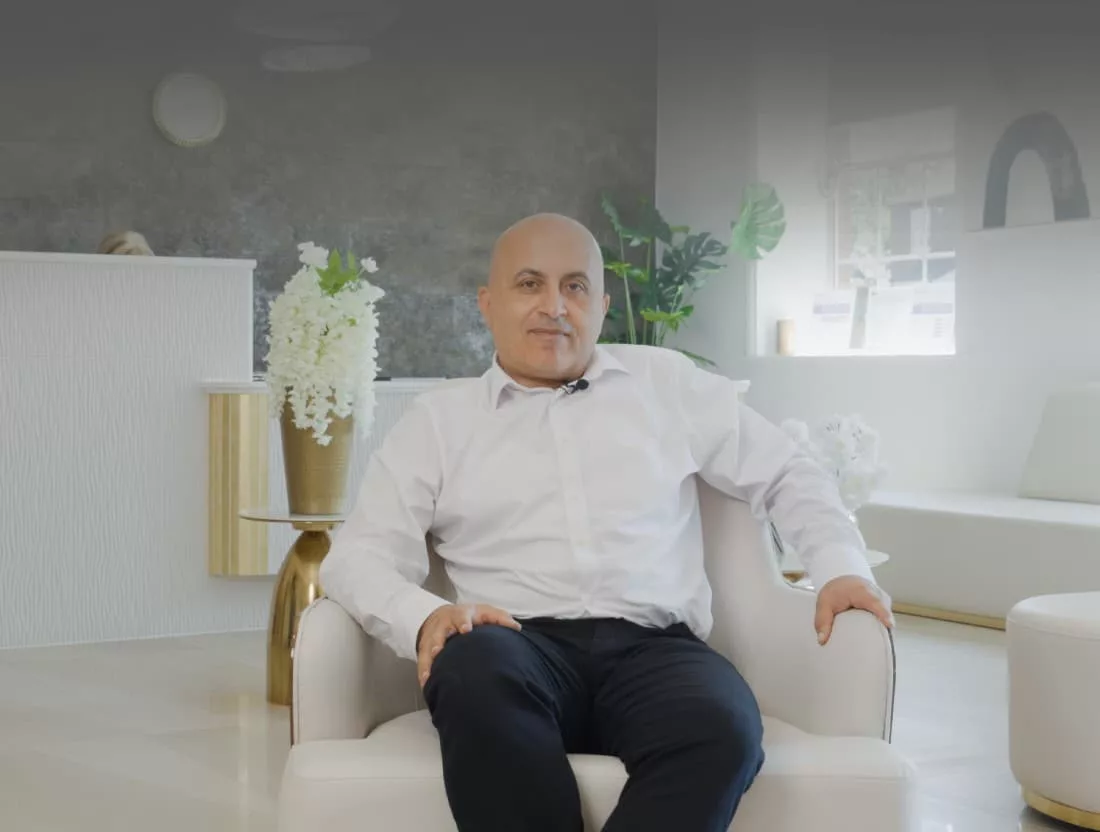
Meet Our Surgeon
Dr. Hazem Hassouna
Consultant Orthopaedic Surgeon
Specialist in Hip and Knee Surgery | GMC Registered (No. 6070956)
With over 25 years of experience, Dr. Hazem Hassouna specialises in hip and knee replacements, arthroscopy, and complex lower limb procedures. He is known for his precision, advanced training, and a patient-first approach to orthopaedic care.
Consultant Insight
This article was written by the Transform Medical team, based on real questions we hear every week in our consultations. We’ve worked closely with our orthopaedic and clinical care teams to make sure this reflects the concerns and decisions real patients face.