
Hip Implants Explained: Your Guide to Implant Types and Materials
If you’re considering or preparing for hip replacement surgery, you may have questions about the type of implant that will be used. There’s no one-size-fits-all solution. The implant selected for you will depend on your age, bone strength, lifestyle and long-term mobility goals.
Here’s what you need to know about the different materials, fixation methods and how long hip implants typically last.
What Is a Hip Implant?
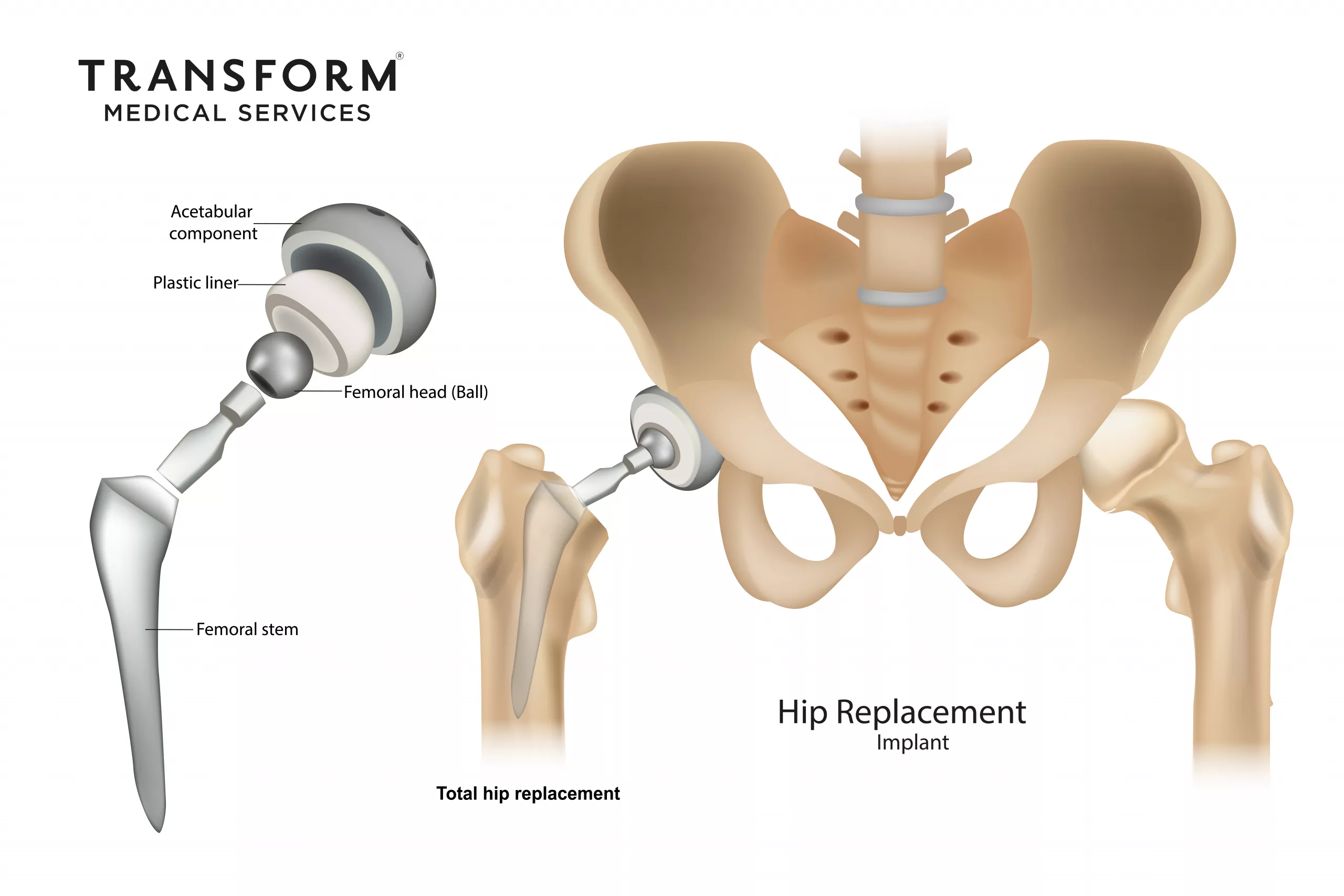
A hip implant replaces the damaged ball-and-socket joint of your natural hip. It’s made of several components:
- A metal stem that fits inside the thigh bone (femur)
- A ball that replaces the head of the femur
- A cup that fits into the pelvis, acting as the new socket
- A liner inside the socket to allow smooth movement between the ball and cup
Together, these parts restore the function of the hip joint and reduce pain.

Cemented vs Uncemented Fixation
There are two main ways that hip implants are attached to the bone.
Cemented implants are fixed in place using a special bone cement. These are often used for:
- Patients over 65
- Those with lower bone density
- People needing fast initial stability
Uncemented implants have a textured or porous surface that encourages natural bone to grow into the implant. These are commonly used for:
- Younger or more active patients
- Those with good bone quality
Your consultant may also recommend a hybrid implant, where one part is cemented and the other is uncemented. This is based on the condition of your bones and your surgeon’s clinical judgement.
What Are Hip Implants Made Of?
Modern hip implants are made from advanced materials that are carefully selected for durability, biocompatibility, and performance. Most implants combine metal, plastic, or ceramic components to mimic the natural movement of the hip joint and reduce pain. Each material has its own benefits and considerations.

Metal Implants
Common materials: Titanium alloys, cobalt-chromium alloys
Why they’re used:
Metals are incredibly strong, making them ideal for weight-bearing parts of the implant, especially the stem and the ball. Titanium, in particular, is lightweight and promotes bone growth when used in uncemented implants.
Pros:
- Highly durable and long-lasting
- Excellent load-bearing strength
- Suitable for most age groups
- Titanium is less stiff than other metals, which may reduce stress on the bone (called “stress shielding”)
Cons:
- Metal-on-metal combinations (now rarely used) have raised concerns about metal ions entering the bloodstream
- Can sometimes be felt in very slim patients or cause a clicking sensation
- May not be suitable for those with metal allergies (though rare)
Plastic (Polyethylene)
Common material: Ultra-high-molecular-weight polyethylene (UHMWPE)
Why it’s used:
Plastic is typically used for the liner inside the socket. It acts as a cushion and allows the ball to glide smoothly, reducing friction and wear.
Pros:
- Reduces joint wear and tear
- Lightweight and flexible
- Modern plastics (cross-linked polyethylene) are highly wear-resistant
- Lower cost compared to ceramic
Cons:
- Can wear down over time, especially in very active patients
- May produce microscopic particles that can trigger inflammation in rare cases
- May require revision surgery after 15–20 years


Ceramic Implants
Common materials: Alumina, zirconia, or ceramic-coated components
Why they’re used:
Ceramic is extremely smooth and wear-resistant, making it ideal for younger or highly active patients where longevity is a top priority.
Pros:
- Extremely low wear rates
- Biocompatible and hypoallergenic (good for patients with metal sensitivity)
- Smooth surface reduces friction, mimicking natural movement
Cons:
- More brittle than metal — can crack or fracture in rare cases
- Generally more expensive
- Not suitable for all patients or implant combinations
- Requires precise placement during surgery
How Materials Are Combined
Most hip replacements use a combination of these materials to balance strength, wear resistance, and compatibility. Common combinations include:
- Metal ball + plastic socket liner (most widely used)
- Ceramic ball + plastic liner (lower wear in younger patients)
- Ceramic ball + ceramic liner (for highly active patients but more sensitive to impact)


How Long Does a Hip Implant Last?
Modern hip replacements typically last 15 to 20 years or more. Many patients enjoy decades of improved mobility without needing another operation.
Factors that affect longevity include:
- Your age and level of physical activity
- The type of implant used
- How well you follow your rehabilitation and long-term care plan
If revision surgery is ever needed later in life, your consultant will talk you through the available options.
Do I Get a Say in the Type of Implant?
At Transform Medical, we believe in transparency. While your consultant will recommend the implant that is most appropriate for your specific case, we’ll always explain:
- The material and brand being used
- Why that particular implant is best suited to you
- Expected outcomes and long-term durability
You’ll also receive a patient implant record after surgery with full details of the device used.

Why Choose Our Hip Replacement Treatment?
We understand the urgency of your needs, and we commit to providing direct access to advanced treatments without any waiting lists.
Meet Our Surgeon
Dr. Hazem Hassouna
Consultant Orthopaedic Surgeon
Specialist in Hip and Knee Surgery | GMC Registered (No. 6070956)
With over 25 years of experience, Dr. Hazem Hassouna specialises in hip and knee replacements, arthroscopy, and complex lower limb procedures. He is known for his precision, advanced training, and a patient-first approach to orthopaedic care.

Consultant Insight
This article was written by the Transform Medical team, based on real questions we hear every week in our consultations. We’ve worked closely with our orthopaedic and clinical care teams to make sure this reflects the concerns and decisions real patients face.